
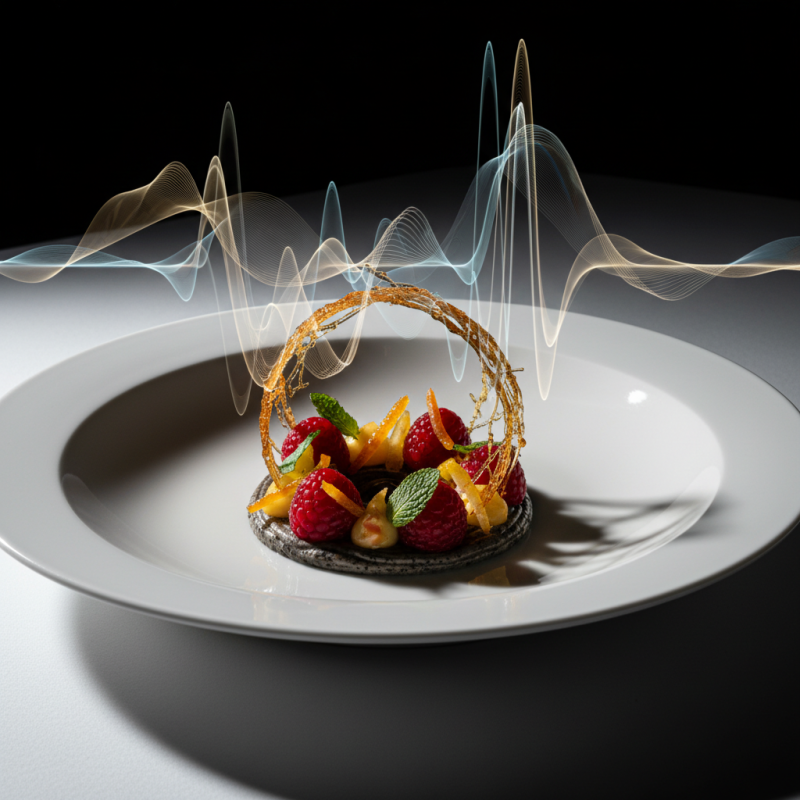
The Secret Ingredient You Can’t See or Taste… Yet
Imagine biting into your favorite chocolate and, simply by changing the song playing, it tastes even richer, sweeter, or perhaps surprisingly bitter. Or picture savoring a meticulously prepared dish in a restaurant, only for the background noise to subtly diminish its intended flavors. If you’ve ever felt a meal was somehow “off” without being able to pinpoint why, the culprit might not have been the ingredients, the cooking, or even your mood – it could have been the soundtrack. This isn’t magic; it’s music food taste science at play, a fascinating field that explores the profound auditory taste influence on our dining experience.
Welcome to neurogastronomy, where the boundaries of flavor are expanded far beyond the tongue. For too long, we’ve overlooked an entire sensory dimension that powerfully shapes our perception of food. This article will delve into the scientific findings that reveal how sound can be a potent, often overlooked, flavor modulator, offering insights for everyone from home cooks to haute cuisine chefs. Prepare to have your understanding of taste—and how to optimize it—revolutionized, discovering why the simple act of choosing the right music could unlock a whole new world of culinary pleasure.
The Unseen Orchestra: Understanding Neurogastronomy and Sound’s Role
Our culinary journey is far more complex than a mere dance of taste buds. It’s a symphony, an intricate blend of sensations that converge in the most sophisticated laboratory of all: the human brain. To truly grasp how sound flavor perception works, we must first understand the wider context of neurogastronomy, a field that’s reshaping how we think about eating.
Beyond the Tongue: A Multimodal Sensory Experience
For generations, the “five senses” model has dominated our understanding of human perception. When it came to food, the focus was almost exclusively on taste (sweet, sour, salty, bitter, umami) and smell. However, modern science paints a much richer picture. Our experience of flavor is not just about what happens on the tongue, but a holistic, multimodal phenomenon where all our senses – sight, smell, touch, and crucially, sound – converge to create a unified perception.
Consider how the vibrant red of a strawberry hints at its sweetness, or how the crisp snap of an apple signals its freshness. The earthy aroma of mushrooms enhances their umami depth. The creamy texture of a panna cotta delights long before it melts on the tongue. Each of these sensory inputs contributes to the overall “flavor” profile, and the brain is the maestro, integrating these disparate signals into a coherent, often surprising, experience. Sound, often relegated to mere background noise, is a powerful participant in this sensory orchestra, capable of subtly—or dramatically—altering our perception of what we’re eating.
What is Neurogastronomy? Bridging Brain and Plate
Neurogastronomy is the scientific discipline dedicated to understanding how the brain creates flavor from the complex interplay of all our senses. It’s a fascinating intersection of neuroscience, psychology, and culinary arts, founded on the premise that flavor is not an inherent property of food, but a construct of the mind. Pioneered by scientists like Charles Spence at Oxford University, this field goes beyond basic taste reception to explore how cognitive factors, memory, emotion, and external stimuli—including sound—shape our eating experiences.
Early observations in neurogastronomy quickly highlighted the profound impact of cross-modal interactions. Researchers discovered, for instance, that eating a potato chip while listening to a loud crunching sound made people perceive the chip as fresher, even if its actual crunchiness hadn’t changed. These findings demonstrated that our brains aren’t passive receptors but active interpreters, constantly seeking to integrate sensory inputs into a coherent narrative. Why is the culinary world now paying attention to the sound flavor perception phenomenon? Because understanding these mechanisms offers an unprecedented opportunity to enhance dining experiences, manage expectations, and even influence food preferences in novel ways. The implications for chefs, food developers, and even health professionals are immense, promising a revolution in how we approach and appreciate food.
Early Clues: The Historical Connection Between Sound and Sensation
While neurogastronomy is a relatively new scientific discipline, the intuitive connection between sound and dining is ancient. Anecdotal evidence abounds across cultures and throughout history. Think of the crackling fire accompanying a hearty meal in ancient communal gatherings, or the delicate classical music often played in fine dining establishments. The clinking of cutlery, the sizzling of a stir-fry, the pop of a champagne cork – these aren’t just incidental noises; they are integral parts of our culinary anticipation and experience.
Traditional dining rituals often incorporated elements of sound, whether through communal chanting, specific instruments, or the deliberate creation of a sonic atmosphere designed to enhance the meal. These practices, though not formalized by scientific method, inherently understood that the environment surrounding a meal plays a crucial role in its perception. From the bustling marketplaces filled with the sounds of vendors and cooking, to the serene silence of a meditative tea ceremony, the auditory landscape has always contributed to the perceived taste and enjoyment of food. The scientific method, through neurogastronomy, has now begun to formalize these observations, moving beyond intuition to quantify and explain precisely how and why sound impacts our palate. What specific mechanisms allow a simple melody to alter the sweetness of your dessert?
The Science Behind the Symphony: How Music Manipulates Taste
The idea that sound can directly alter how food tastes might seem far-fetched, but a growing body of scientific research proves otherwise. Our brains are wired to connect disparate sensory inputs, and music, with its complex array of elements—pitch, tempo, timbre, volume, and emotional resonance—provides a rich palette for influencing flavor perception.
Pitch Perfect: Sweetness and Bitterness on the Scale
One of the most striking findings in music food taste science concerns the relationship between musical pitch and fundamental taste qualities. Numerous scientific studies have demonstrated a consistent link between high-pitched sounds and the enhancement of sweetness, while low-pitched sounds often amplify bitterness or umami perception.
Consider the “Sonic Seasoning” experiments conducted by Professor Charles Spence and his team. In one notable study, participants tasted a piece of toffee while listening to different musical tracks. When listening to high-pitched piano melodies, the toffee was consistently rated as significantly sweeter. Conversely, when accompanied by lower, more resonant tones, the same toffee was perceived as less sweet, and sometimes even slightly bitter.
This effect isn’t limited to a single food item. Similar results have been observed with dark chocolate, where high-pitched sounds made it taste sweeter, and low-pitched sounds accentuated its inherent bitterness. The proposed mechanism behind this auditory taste influence lies in cross-modal correspondences that exist in our brains. High pitches are often associated with lightness, sweetness (think of high-pitched “ding” sounds often accompanying sweet treats in cartoons), and pleasantness, while low pitches can connote heaviness, darkness, and bitterness. Our brains make these subconscious associations, influencing our conscious perception of taste.
These findings have direct implications for beverage manufacturers and restaurateurs. Imagine a bar that plays specific music to make their cocktails taste sweeter or more bitter, without altering the ingredients. Or a coffee shop using sonic cues to balance the perceived acidity or sweetness of their brews. The implications extend far beyond anecdotal enjoyment, offering a precise tool for flavor manipulation.
Tempo and Rhythm: Accelerating and Decelerating Flavor Perception
Beyond pitch, the speed and rhythm of music also play a critical role in sound flavor perception. Just as a fast tempo can make us feel energetic and quicken our pace, it can also influence how we perceive the intensity, richness, and even the “speed” of flavor delivery in our mouths.
Faster tempo music, characterized by a quick beat and rapid progression, has been shown to make food and drink items seem more vibrant, exciting, and perhaps even “lighter.” For instance, a study found that people rated sparkling wine as more refreshing and bubbly when listening to up-tempo, effervescent music. This could be attributed to the brain associating rapid musical pulses with effervescence or a heightened sense of activity. Conversely, slower tempo music, with its more languid pace, can make foods feel richer, more indulgent, and even increase the perceived time it takes to savor a flavor. Think of the difference between a quick bite and a leisurely, drawn-out meal – the music can dictate this pacing internally.
Rhythm, the pattern of sounds in time, can also impact texture perception. A steady, predictable rhythm might enhance the sensation of creaminess or smoothness, creating a comforting experience. A more erratic or disjointed rhythm, however, might make a crunchy food seem even more crisp, or a chewy food seem tougher. The subtle alignment, or misalignment, of a dish’s inherent texture with the music’s rhythm can create a powerful, often subconscious, effect on how we experience its mouthfeel and overall satisfaction.
Timbre and Texture: The Smooth, Crunchy, and Creamy Sounds of Food
Timbre, often described as the “color” or “quality” of a sound that distinguishes different types of sound production, also exerts a powerful auditory taste influence. The specific instruments used, the resonance, and the overall “texture” of the soundscape can profoundly affect our perception of food’s actual texture and even its richness.
For example, music featuring smooth, legato (connected notes), and resonant timbres (e.g., cellos, low brass, sustained vocal harmonies) has been linked to an enhanced perception of creaminess or richness in foods like chocolate mousse or a decadent sauce. Our brains seem to associate the smooth, flowing nature of these sounds with a similar sensation in the mouth. On the other hand, music with sharp, staccato notes (disconnected notes), higher frequencies, and percussive timbres (e.g., plucked strings, xylophones, sharp drum beats) can make crunchy foods seem even crisper or foods taste “fresher.” Imagine eating a cracker while listening to high-frequency, percussive music—the crunch seems amplified.
Furthermore, ambient sounds beyond structured music contribute to timbre perception. The sound of crackling fire might enhance the comforting, roasted quality of a dish, while the gentle babble of a stream could make a light salad seem more refreshing. Restaurateurs have begun to experiment with “soundscapes” – carefully curated ambient noises that align with the food’s intended textures and themes, creating a fully immersive sensory experience that elevates the perceived quality of the meal.
Volume and Intensity: Amplifying or Subduing Taste
The sheer volume of background music can also be a surprising modulator of flavor intensity. While extremely loud music can be distracting and diminish enjoyment across the board, specific volume levels can subtly amplify or subdue certain taste characteristics.
Studies have indicated that moderate background noise or music can sometimes make flavors seem more intense. This might be due to a slight increase in arousal or attention, which heightens sensory processing. However, when music becomes too loud, it often has a detrimental effect, particularly on our ability to discern subtle flavors. This “sensory overload” phenomenon, where the brain becomes overwhelmed by auditory input, can actually dull our taste perception. It’s why airplane food often tastes bland; the pervasive low-frequency drone of the engines can suppress our perception of sweet and salty tastes, while enhancing umami. This “airplane effect” demonstrates a real-world scenario where high-volume, low-frequency sound directly impacts taste.
Conversely, a very quiet environment or soft, unobtrusive music can allow diners to focus more intently on the food, potentially enhancing the appreciation of nuanced flavors and textures. This delicate balance of volume is crucial for restaurateurs aiming to create an optimal dining atmosphere. It’s not just about what music is playing, but how loudly it’s being presented, highlighting the direct link between sound’s intensity and our palate’s sensitivity.
Melody and Harmony: The Emotional Resonance of Flavor
Beyond the physical attributes of sound, the emotional resonance evoked by melody and harmony plays a profound role in sound flavor perception. Music is a powerful emotional trigger, and our emotional state directly impacts how we perceive and enjoy food.
Harmonious, consonant music (pleasing to the ear, often associated with happiness and relaxation) tends to foster a positive emotional state, which can make food taste better, more enjoyable, and even sweeter. When we are happy and relaxed, our brains are more receptive to pleasurable sensations, including those derived from food. This is why romantic melodies often accompany fine dining – they aim to put diners in a state of contentment, enhancing the overall experience.
Dissonant or jarring music, on the other hand, can create feelings of tension, anxiety, or unease. This negative emotional state can diminish appetite, make food seem less appealing, and even heighten perceptions of bitterness or sourness. Imagine trying to enjoy a delicate pastry while listening to heavy metal; the clash in emotional tone is likely to detract from the intended pleasure of the dessert. Even simple melodic patterns can have an impact. A soaring, uplifting melody might make a dish feel more luxurious or celebratory, while a melancholic tune might enhance the perceived “comfort” of a warm, hearty meal. The cognitive and emotional links are undeniable: music sets the emotional stage upon which our taste buds perform, demonstrating just how intertwined our feelings are with our flavor experiences.
Genre, Culture, and Context: Setting the Culinary Scene
The overall genre of music, combined with cultural context and personal preferences, acts as a powerful contextual cue that significantly shapes our dining expectations and, consequently, our taste perception. This is where auditory taste influence becomes highly personalized and deeply rooted in our experiences.
Different musical genres carry specific associations. Classical music often evokes feelings of sophistication and luxury, making food in such an environment feel more refined and perhaps even taste “fancier.” Jazz might suggest a cool, relaxed, yet upscale vibe, making a cocktail feel more chic. Upbeat pop music can make a casual dining experience feel more energetic and fun, possibly enhancing the perceived freshness of fast food. Conversely, playing incongruous music—like heavy metal in a high-end French restaurant—can create cognitive dissonance, leading to a jarring experience that detracts from the food’s quality.
Cultural background also plays a significant role. Music from one’s own culture can evoke nostalgia, comfort, and a sense of familiarity, which can make food seem more authentic and enjoyable. A dish served with traditional music from its origin country often tastes “more authentic” because the music reinforces cultural expectations and memories. Moreover, personal preference for certain genres means that what enhances one person’s meal might detract from another’s. A metalhead might find classical music boring and therefore feel less engaged with their food, while a classical music lover might feel overwhelmed by a noisy rock track.
Restaurateurs are increasingly leveraging these insights. By carefully curating playlists that align with their brand, cuisine, and target audience, they are crafting immersive experiences that go far beyond just plating and service. The music becomes an invisible ingredient, setting the perfect mood and priming diners’ palates for the specific culinary journey ahead.
Practical Applications: Harmonizing Your Meals with Sound
Understanding the science behind how music affects taste isn’t just an academic exercise; it offers tangible ways to enhance your own dining experiences and those of others. From the home kitchen to commercial establishments, the power of auditory taste influence can be harnessed to unlock new dimensions of flavor.
For the Home Cook: Crafting Your Culinary Soundtrack
* Experiment with Pitch: Hosting a dessert night? Try playing high-pitched, lighter music to make your sweets taste even sweeter. If you’re serving a rich, savory dish, a deeper, lower-pitched classical piece might enhance its umami notes.
* Match Tempo to Mood: For a quick, refreshing meal like a salad or light lunch, opt for upbeat, moderate tempo music. For a leisurely, indulgent dinner, slow, ambient jazz or classical music can encourage slower eating and greater appreciation of complex flavors.
* Consider Timbre: If you’re serving something creamy, experiment with music featuring smooth, sustained instrumentals. For crunchy snacks, sharp, percussive sounds might amplify the texture.
* Set the Emotional Scene: Choose music that aligns with the desired emotional tone of your meal. Romantic music for a date night, uplifting music for a celebration, or calming tunes for a relaxing evening in. Don’t underestimate the power of nostalgia – playing music from a memorable time can evoke positive emotions that enhance enjoyment.
For Restaurateurs and Food Businesses: Beyond Ambiance
* Strategic Playlisting: Move beyond generic background music. Curate playlists that specifically complement the cuisine, ingredients, and desired flavor profiles of your menu. For example, a seafood restaurant might benefit from music evoking the ocean (even subtly), while an Italian restaurant could use authentic Italian folk or classical music.
* Targeted Flavor Enhancement: Use sonic seasoning to subtly manipulate taste. Want to make your dark chocolate dessert taste sweeter? Incorporate high-frequency sounds into your playlist during dessert service. Aiming for richer, more robust flavors in your mains? Low-frequency, resonant music could be the key.
* Managing Perceived Texture: For dishes with a crucial textural component, use music to enhance it. Playing sounds that mimic crunching might make your fried chicken seem even crispier, while smooth, flowing music could elevate a creamy soup.
* Volume Control is Key: Avoid excessively loud music that can overwhelm sensory perception and reduce the ability to discern flavors. Conversely, ensure the music isn’t so quiet that it disappears entirely, missing an opportunity for enhancement. A moderate, well-chosen volume is often ideal.
* Sensory Branding: Integrate sound into your overall brand identity. The music played in your establishment should reinforce your restaurant’s concept, target audience, and the unique dining experience you aim to provide.
The Symphony of Flavor Awaits
The journey through the world of neurogastronomy reveals a profound truth: taste is not merely a biological function but a complex, multi-sensory experience meticulously constructed by our brains. Music food taste science has unequivocally demonstrated that sound, often relegated to the background, is an active and powerful ingredient in this construction. From the subtle nuances of pitch influencing sweetness to the emotional resonance of a melody shaping our overall enjoyment, auditory taste influence is a frontier that promises to revolutionize how we interact with food.
As we continue to unravel the intricate connections between our senses, the culinary landscape expands beyond the plate to encompass the entire dining environment. For food enthusiasts, restaurateurs, and culinary professionals alike, this understanding offers an exciting new toolkit for exploration and innovation. The next time you sit down to eat, pause and consider the sounds around you. Are they enhancing your meal, or subtly sabotaging it? By consciously curating your sonic environment, you gain the power to unlock richer flavors, deeper satisfaction, and an entirely new dimension of gastronomic pleasure. The secret ingredient has been there all along, an unheard symphony waiting to transform your next meal. What will you choose to listen to?